Roanoke Valley, Virginia · Coming Fall 2027
Facility Engineering
We’re building a closed-loop, solar- and wind-powered manufacturing campus in the Roanoke Valley.
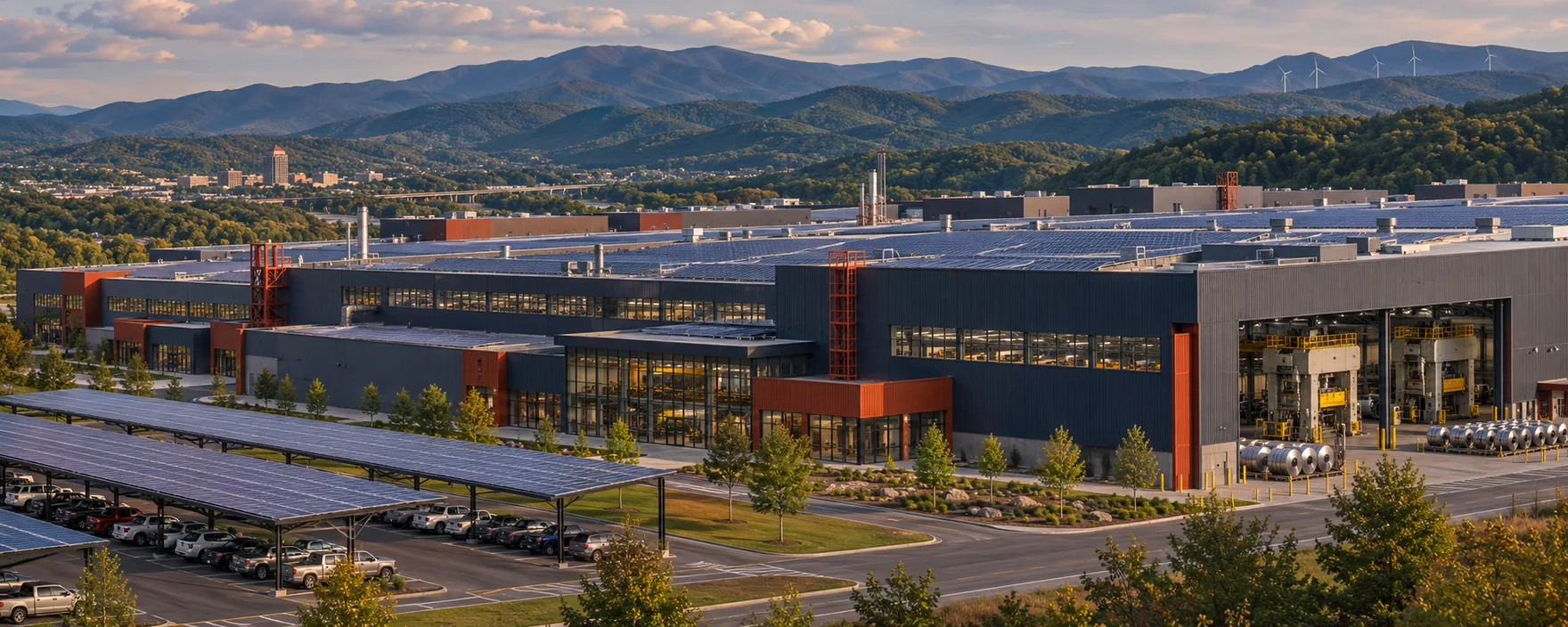
Concept illustration of the planned campus
- Estimated solar capacity
- 8–15+ MW
- Rinse water recovery target
- 98%+
- VOC destruction target in treated exhaust
- 99%+
Good engineering from day one.
We chose these systems on their engineering merits. A stamping plant has to handle sharp swings in power demand, keep paint and measuring equipment clear of shop dust, and protect the people working around welders, mills, and presses. It makes sense to design the building around those needs from the start.
On-Site Solar, Wind & Microgrid Power Architecture
Heavy stamping presses, electric heat-treat furnaces, and E-coat curing ovens draw massive peak power. In Southwest Virginia, pairing rooftop and canopy solar with regional wind and battery storage creates energy resilience.
Full-roof and carport solar array. The plan calls for high-efficiency bifacial solar panels across the manufacturing, warehouse, and school roofs and over employee and visitor parking. The planning estimate is 8 to 15+ MW, depending on roof acreage.
Regional wind. The design calls for supplementing on-site solar with power tied to regional Appalachian wind farms through a power purchase agreement or utility renewable tariff. On-site vertical-axis wind turbines are also proposed for campus power and educational demonstrations.
Industrial battery energy storage. On-site iron-air or lithium-iron-phosphate battery banks are options to shave peak power spikes when the servo presses cycle and support critical equipment during grid outages.
Zero-Liquid-Discharge & Closed-Loop Water Systems
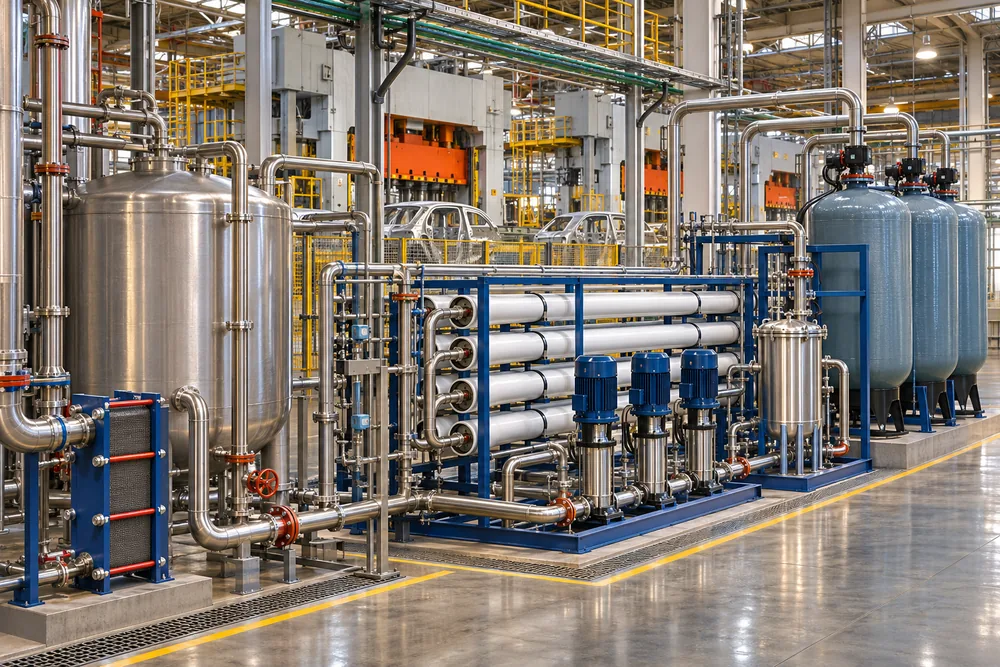
Pretreatment wash lines, E-coat dip tanks, and abrasive waterjets use significant water. We’re designing for zero industrial wastewater discharge.
Closed-loop ultrafiltration and reverse osmosis. E-coat rinse stages and metal pretreatment baths will recirculate through filtration and reverse osmosis. The design targets recovery of 98% or more of rinse water and reclaims unused E-coat paint solids for return to the main dip tank.
Evaporators and crystallizers. The concentrated reject stream will pass through vacuum evaporation and crystallization. The goal is to recover water for reuse and send the remaining solids to a licensed handler, with zero process water discharged to municipal sewers or local waterways.
Closed-loop waterjet and machine coolant recycling. Abrasive waterjets will use dedicated garnet-settling and closed-loop chiller circuits. Centralized tramp-oil skimmers and coalescing filters will extend coolant life in the CNC shop.
Air Quality & Emissions Controls
We’ll isolate processes with dedicated air-scrubbing systems to protect indoor air for our union workforce and students and control emissions outside the facility.
Regenerative thermal oxidation and waterborne coatings. The design pairs low-VOC waterborne automotive primers and basecoats with a regenerative thermal oxidizer on paint booth and curing oven exhaust. The design target is 99% or greater VOC destruction in the treated exhaust stream.
Electrostatic mist collectors and HEPA filtration. Machine-mounted oil-mist collectors on CNC mills, lathes, and grinders will work with centralized high-efficiency dust and fume extraction.
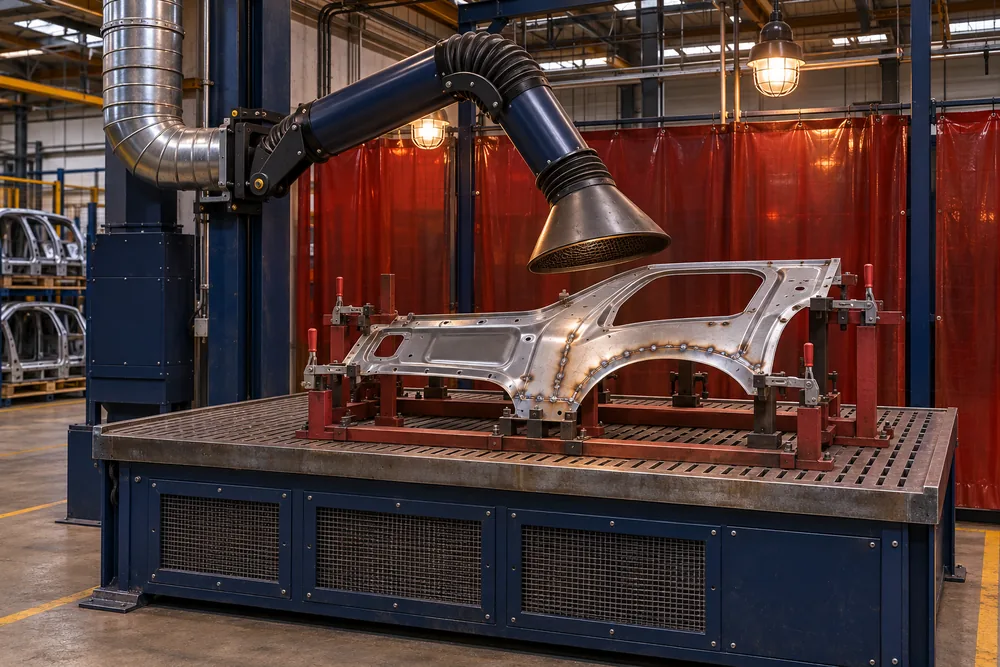
Welding fume extraction. Production welding cells and the Union Auto Works School will use articulated fume-extraction arms and downdraft welding tables with multi-stage HEPA and activated-carbon filtration.
Positive-pressure clean zones. Filtered makeup air will keep stamping dust and outside pollen away from critical surfaces in the paint finishing wing and the coordinate-measurement and laser metrology lab.
Steel Scrap Recovery & Permitting
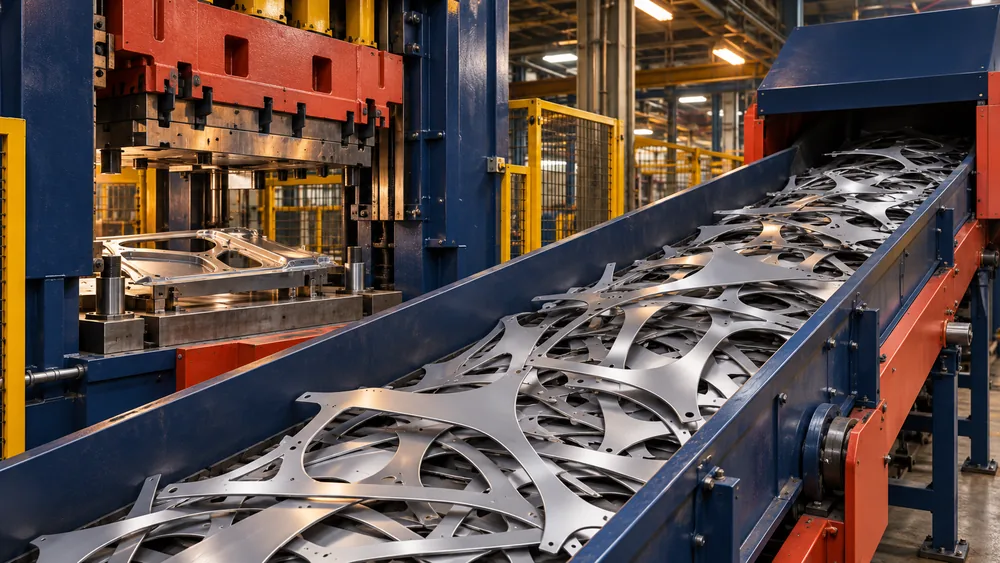
Under-floor scrap conveyors beneath the stamping presses will route trimmed steel directly to balers. Clean, sorted steel scrap will go back to domestic electric-arc-furnace mills for recycling.
The process-water and air-control designs will inform the permitting package for the Virginia Department of Environmental Quality. Equipment sizing and performance targets are part of the engineering plan for the Roanoke Valley facility.